- News
- Sep 9, 2026
- 5 min read
Bigger Does Not Mean Better, Private Charter Operators Say
Fleet expansion does not always mean success, participants said during a discussion at the annual Air Charter Expo at London Biggin Hill Airport.



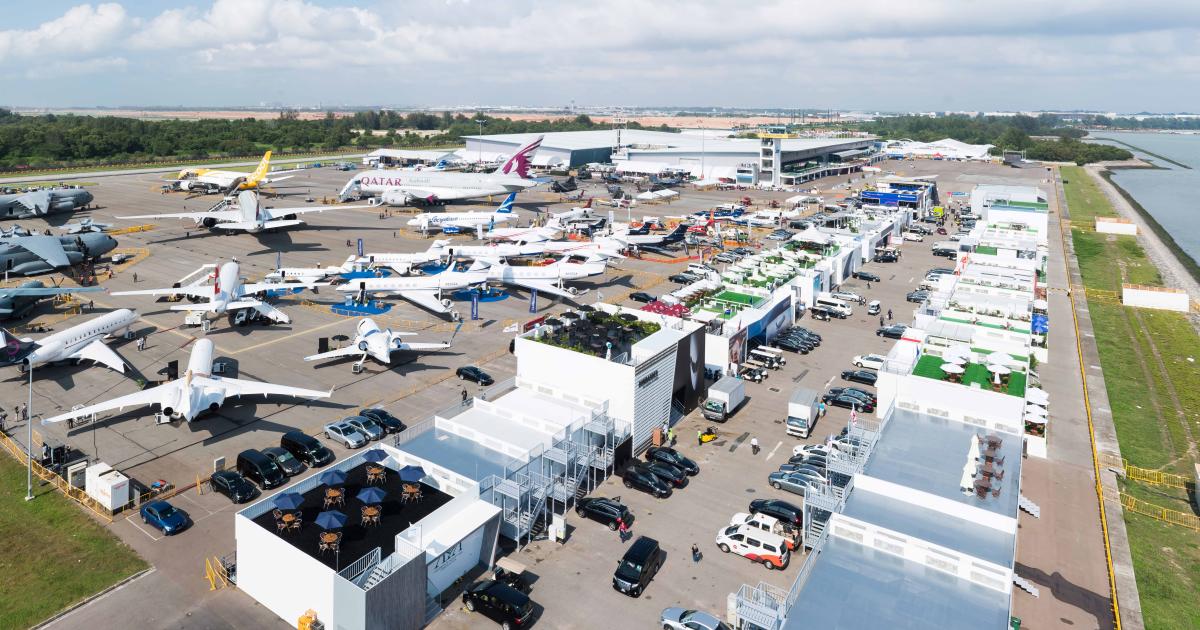
Fleet expansion does not always mean success—this was the conclusion reached by participants in a discussion at the annual Air Charter Expo (ACE), held on Tuesday at London Biggin Hill Airport. Representatives of small charter companies operating in the business aviation niche said boutique operators respond more quickly both to geopolitical changes and to customer requests. At the same time, they stressed that growth must be approached carefully, as adding new aircraft or aircraft types often only complicates operations for a small carrier.
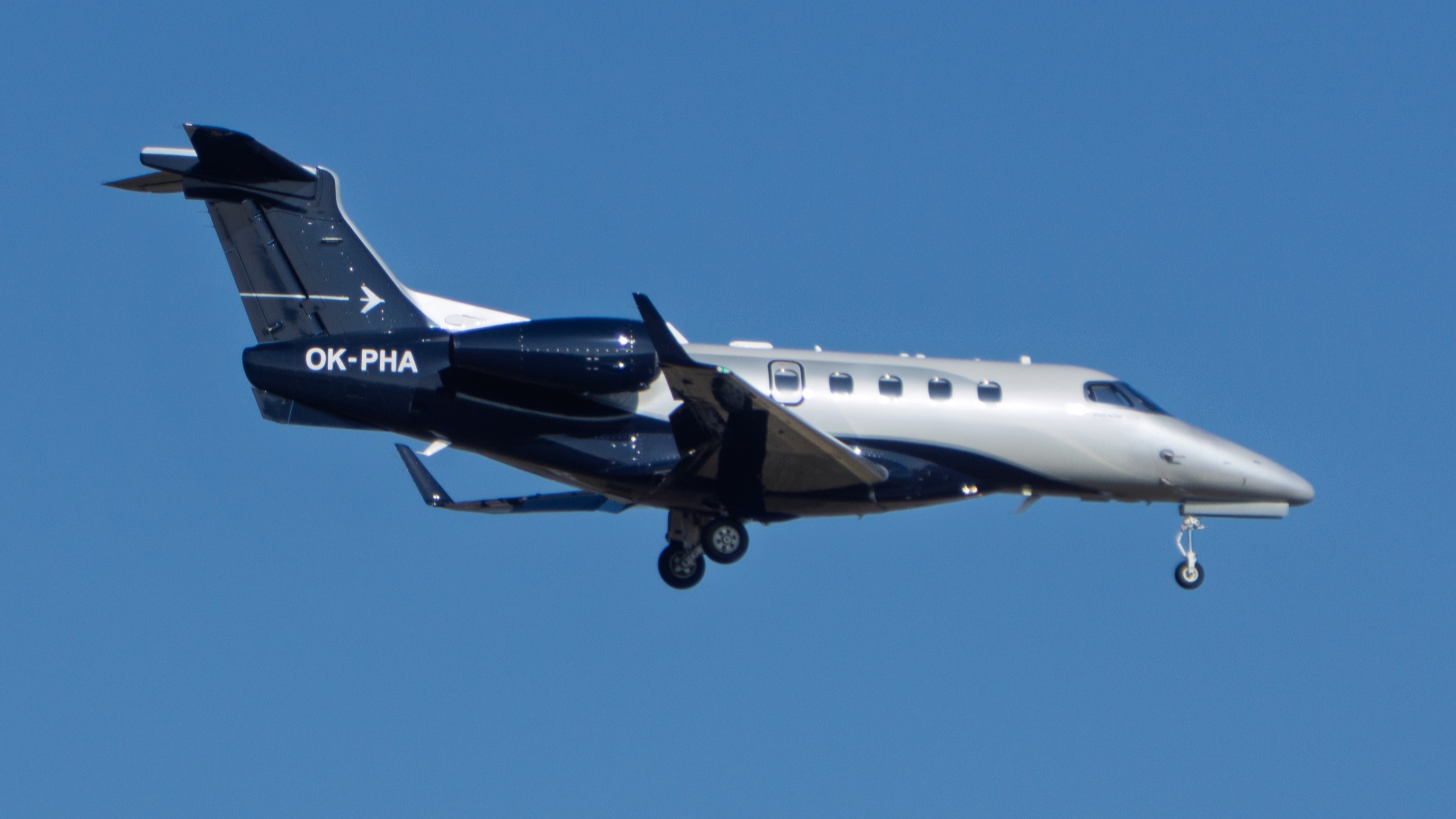
“Bigger does not always mean better,” said Vince Essex, CEO of Birmingham-based Above Aero. Last month, the company launched fixed-price charter flights between cities using an Embraer Phenom 100—in a segment Essex calls “the modern achievement market.” The company has already identified a second Phenom for its fleet of very light jets, but, according to Essex, “the main thing for us is to become stronger, not bigger.”
Volodymyr Bohaichuk, a charter specialist at Czech company CTR Atmospherica Aviation, agrees that this type-based specialization benefits small operators. The company operates its own fleet of eight Embraer Phenom 300E and Praetor 600 aircraft.
The situation is similar at Luminair: the Hamburg-based operator recently signed a contract for nine Cessna Citation Latitudes, making this the fourth type in its fleet of 13 aircraft. “Clearly, we do not want to add new types to our air operator certificate in the near future, because standardization is what makes scaling possible,” a company representative noted. The first Latitude is due to be delivered by the end of the year, with the remaining eight to follow next year.
Beyond the question of aircraft types, Bohaichuk said that “the question is not whether we need to scale, but whether it is economically justified.” Essex pointed to the “myth surrounding utilization” and warned that flight hours do not always translate into profit. In his view, it is more important for a small operator to focus on “how we are perceived and how we address vulnerabilities along the way.”
For CTR Atmospherica, so-called “virtual scale” is created through strategic agreements with trusted operators. “When you are perceived as a reliable partner, size ceases to matter,” Bohaichuk observed, adding that “an operator may be small, but that is no reason to operate inefficiently.”
Regardless of scale—and Essex noted that the regulatory requirements for obtaining an air operator certificate are the same “whether we have one aircraft or a fleet of 15 Citations”—small operators are subject to the same oversight. According to Trotter, “the authorities monitor a small operator almost more closely: inspections are conducted more frequently… and, in a sense, this pushes us to improve safety and procedures even further.”
However, according to Bohaichuk, “although the regulator generally understands the difference in scale between small and large operators, the administrative burden could still be more proportionate to the size of the company.”
Fleet expansion does not always mean success—this was the conclusion reached by participants in a discussion at the annual Air Charter Expo (ACE), held on Tuesday at London Biggin Hill Airport. Representatives of small charter companies operating in the business aviation niche said boutique operators respond more quickly both to geopolitical changes and to customer requests. At the same time, they stressed that growth must be approached carefully, as adding new aircraft or aircraft types often only complicates operations for a small carrier.
“Bigger does not always mean better,” said Vince Essex, CEO of Birmingham-based Above Aero. Last month, the company launched fixed-price charter flights between cities using an Embraer Phenom 100—in a segment Essex calls “the modern achievement market.” The company has already identified a second Phenom for its fleet of very light jets, but, according to Essex, “the main thing for us is to become stronger, not bigger.”
Volodymyr Bohaichuk, a charter specialist at Czech company CTR Atmospherica Aviation, agrees that this type-based specialization benefits small operators. The company operates its own fleet of eight Embraer Phenom 300E and Praetor 600 aircraft.

Sponsored by Jet24 global
The situation is similar at Luminair: the Hamburg-based operator recently signed a contract for nine Cessna Citation Latitudes, making this the fourth type in its fleet of 13 aircraft. “Clearly, we do not want to add new types to our air operator certificate in the near future, because standardization is what makes scaling possible,” a company representative noted. The first Latitude is due to be delivered by the end of the year, with the remaining eight to follow next year.
Beyond the question of aircraft types, Bohaichuk said that “the question is not whether we need to scale, but whether it is economically justified.” Essex pointed to the “myth surrounding utilization” and warned that flight hours do not always translate into profit. In his view, it is more important for a small operator to focus on “how we are perceived and how we address vulnerabilities along the way.”
For CTR Atmospherica, so-called “virtual scale” is created through strategic agreements with trusted operators. “When you are perceived as a reliable partner, size ceases to matter,” Bohaichuk observed, adding that “an operator may be small, but that is no reason to operate inefficiently.”
Regardless of scale—and Essex noted that the regulatory requirements for obtaining an air operator certificate are the same “whether we have one aircraft or a fleet of 15 Citations”—small operators are subject to the same oversight. According to Trotter, “the authorities monitor a small operator almost more closely: inspections are conducted more frequently… and, in a sense, this pushes us to improve safety and procedures even further.”
However, according to Bohaichuk, “although the regulator generally understands the difference in scale between small and large operators, the administrative burden could still be more proportionate to the size of the company.”
Popular tags: