- News
- Oct 13, 2025
- 4 min read
First Report on Sustainable Aviation Fuel Use in Europe
In 2024, sustainable aviation fuel accounted for 0.6% of all aviation fuel supplied in the European Union.


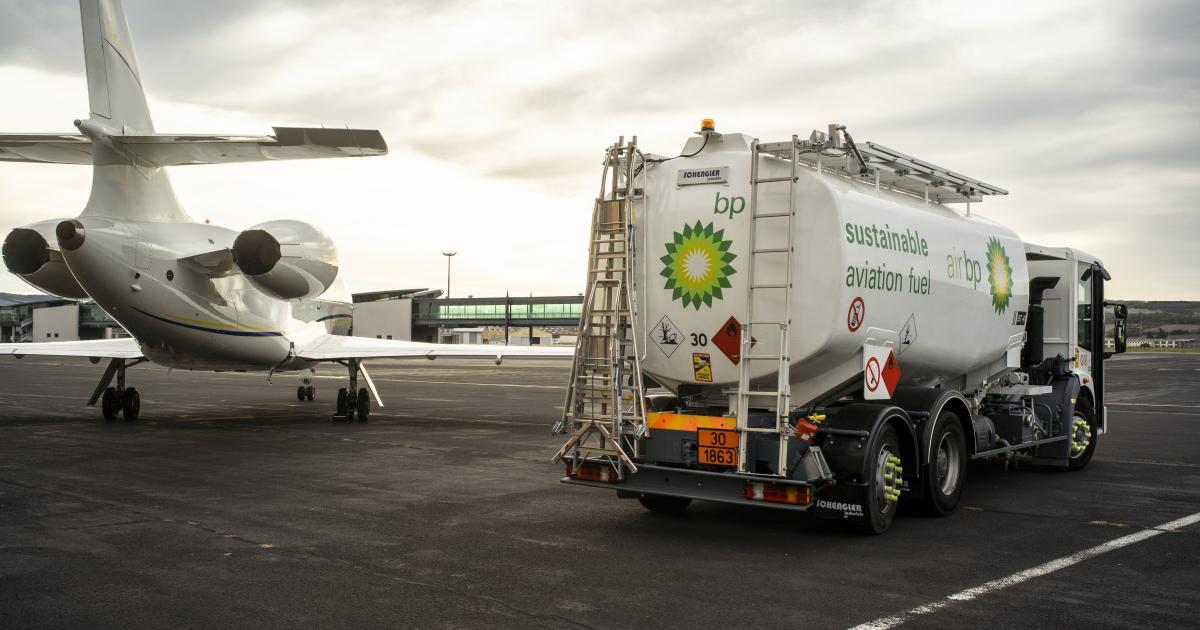
Fuel suppliers reported that sustainable aviation fuel (SAF) accounted for 0.6% of all aviation fuel uplifted at European Union (EU) airports in 2024. EASA published the data as a baseline for meeting SAF requirements in its first ReFuelEU Aviation Annual Technical Report.
A mandatory target has been set for 2025: SAF must account for 2% of all fuel. According to the report, the volume of SAF purchased, supplied and used in the EU by all aircraft operators last year amounted to 193 kilotonnes, or 63.7 million gallons, reducing carbon emissions by 714 kilotonnes. According to the ICAO CO2 calculator, this is equivalent to approximately 10,000 flights between Madrid and Paris.
Based on EASA’s production capacity estimates, the EU is on track to achieve its target of a 6% SAF blend by 2030. Synthetic fuel was not included in the reported SAF mix in 2024.
The report stated that the average price of SAF in the EU last year was €2,085 per tonne, equivalent to approximately $6.91 per gallon. This is almost three times the equivalent Jet-A price of €734 per tonne.
In 2024, 25 fuel suppliers supplied SAF at 33 airports in 12 EU member states. However, the market remains highly concentrated: 99% of all supplies went to airports in just five member states—France, the Netherlands, Spain, Sweden and Germany.
Almost all SAF supplied in the EU last year was biofuel, produced mainly from used cooking oil (81%) and animal fat waste (17%). Just over two-thirds of the feedstock came from outside the EU: China (38%) and Malaysia (12%) were the main suppliers, while Finland was the principal source in Europe (10%).
The 2024 report was based on information received from 67% of aviation fuel suppliers and 74% of aircraft operators subject to the ReFuelEU rules. EASA said that complete reporting for 2025 would be required to accurately assess the level of compliance with SAF requirements.
Fuel suppliers reported that sustainable aviation fuel (SAF) accounted for 0.6% of all aviation fuel uplifted at European Union (EU) airports in 2024. EASA published the data as a baseline for meeting SAF requirements in its first ReFuelEU Aviation Annual Technical Report.
A mandatory target has been set for 2025: SAF must account for 2% of all fuel. According to the report, the volume of SAF purchased, supplied and used in the EU by all aircraft operators last year amounted to 193 kilotonnes, or 63.7 million gallons, reducing carbon emissions by 714 kilotonnes. According to the ICAO CO2 calculator, this is equivalent to approximately 10,000 flights between Madrid and Paris.
Based on EASA’s production capacity estimates, the EU is on track to achieve its target of a 6% SAF blend by 2030. Synthetic fuel was not included in the reported SAF mix in 2024.

Sponsored by Jet24 global
The report stated that the average price of SAF in the EU last year was €2,085 per tonne, equivalent to approximately $6.91 per gallon. This is almost three times the equivalent Jet-A price of €734 per tonne.
In 2024, 25 fuel suppliers supplied SAF at 33 airports in 12 EU member states. However, the market remains highly concentrated: 99% of all supplies went to airports in just five member states—France, the Netherlands, Spain, Sweden and Germany.
Almost all SAF supplied in the EU last year was biofuel, produced mainly from used cooking oil (81%) and animal fat waste (17%). Just over two-thirds of the feedstock came from outside the EU: China (38%) and Malaysia (12%) were the main suppliers, while Finland was the principal source in Europe (10%).
The 2024 report was based on information received from 67% of aviation fuel suppliers and 74% of aircraft operators subject to the ReFuelEU rules. EASA said that complete reporting for 2025 would be required to accurately assess the level of compliance with SAF requirements.
Popular tags: