- News
- Apr 16, 2026
- 14 min read
Iranian Military Action Deepens Middle East Uncertainty
On February 28, Dubai residents heading outdoors for the weekend heard ominous explosions reverberating across the sky, distant yet almost tangible. Few immediately realized that the Gulf had suddenly found itself at war once again.


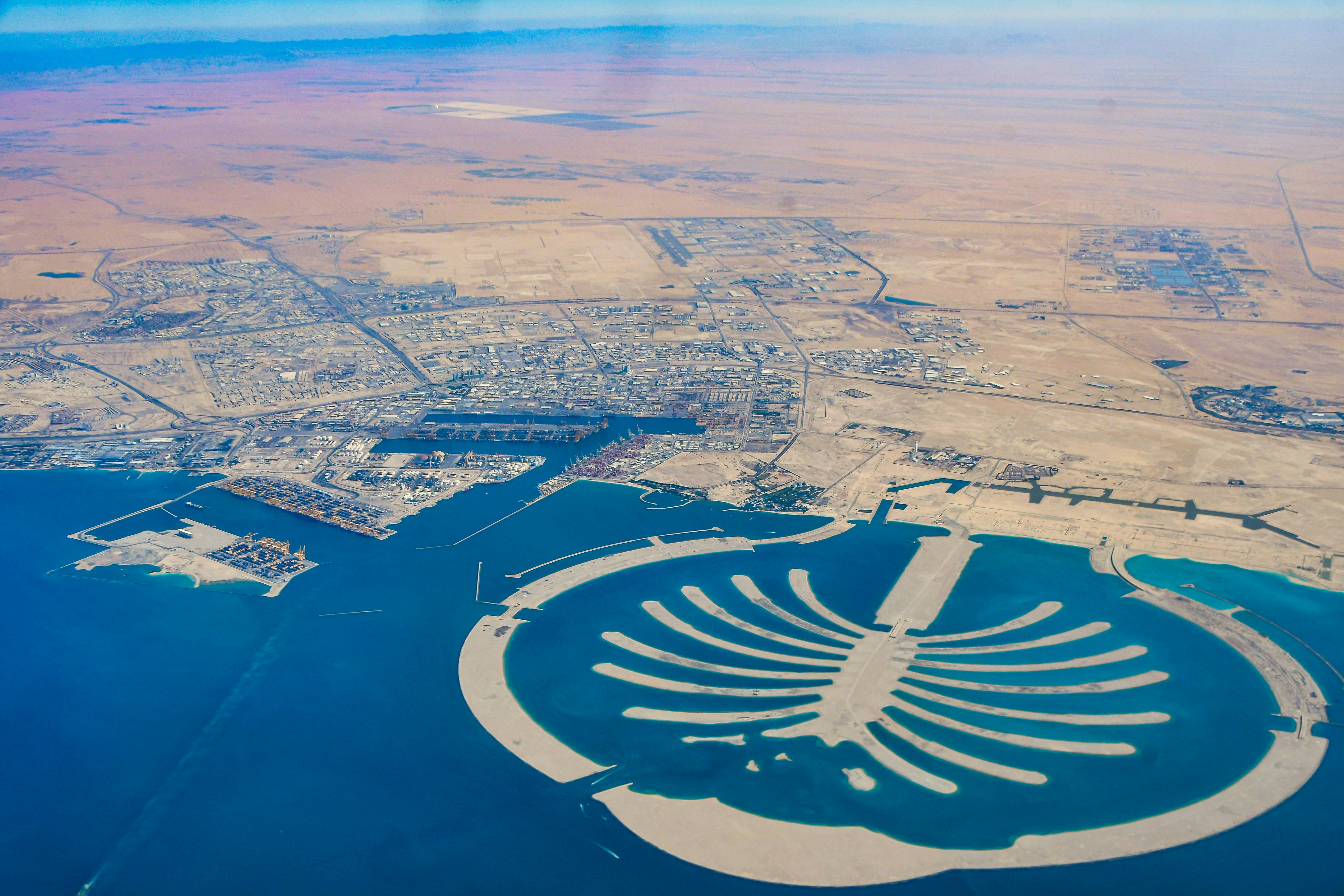
On February 28, as Dubai residents headed outdoors for the weekend, they heard ominous explosions reverberating across the sky, distant yet almost tangible, and few immediately realized that the Gulf had suddenly found itself at war once again.
A month later, there was no clear end to the war in sight. In early April, US President Trump suggested that the war could end in “two or three weeks,” but the unpredictability of Middle Eastern geopolitics could mean that the decision is not entirely up to him. Concerned about securing food and oil supplies, the UAE threatened to join the war to reopen the Strait of Hormuz.
Iran’s response to the US-Israeli bombing resulted in serious incidents, including a drone attack on Dubai International Airport (OMDB) on March 7 that briefly halted airport operations. Demand for private evacuation and rescue charter flights surged after missile strikes repeatedly disrupted state-organized repatriation flights.
The March 18 attack on Qatar’s liquefied natural gas processing facility in Ras Laffan caused significant damage, leaving about 17% of its capacity out of operation, with repairs likely to take between three and five years.
Iran’s late-March missile strikes on airports in Kuwait and Iraq, as well as a strike on a US air base in Saudi Arabia, underscored the danger to aircraft, even on the ground. Nevertheless, commercial aviation returned to near-full operation: Cirium data published on March 27 showed that only 13% of scheduled regional flights had been canceled or were not operating at that time.
Since the war began, UAE air defense systems have intercepted more than 430 ballistic missiles, 20 cruise missiles and 2,000 unmanned aerial vehicles. The WAM news agency reported the deaths of two Emirati soldiers and a Moroccan working under contract with the armed forces, as well as nine civilians. About 190 foreign nationals sustained injuries of varying severity.
Evolving Guidance
Hani Bakr, MedAire’s senior vice president for aviation and maritime security in Cairo, said business aviation operators face rapidly changing NOTAMs (air traffic notices), evolving conflict-zone guidance, and sudden airspace closures and restrictions, significantly complicating flight planning.
“The main factors determining risk in the region are airspace instability and unpredictability, rather than any single fixed threat,” he said. Recently, flights have been operating on longer routes, fuel consumption has increased, crew-duty constraints have grown, and insurance issues have arisen. Collective crew resistance to operating certain flights that exceed acceptable risk thresholds is causing delays and schedule disruptions.
Erik Schouten, CEO of Dyami Security Intelligence, said Qatar, the UAE and Bahrain remain the areas of greatest concern for business aviation operations. The threats are associated with Iranian attempts to strike tourist areas or business centers where banks or US companies are located, as well as military facilities or air bases, ports and embassies.
“Iran still has an enormous number of ballistic missiles and drones,” he said. “They only need to launch once or twice a day to disrupt the enemy’s plans.”
Traffic Falls Sharply
WingX Advance estimated that business jet departures from Middle Eastern countries fell by 41% in late March and by 14% since the beginning of the year. Argus International’s data on business jet market activity showed that monthly flights in the Middle East fell by 58% in March compared with February 2026, while the annual figure for March 2026 was down 55% compared with March 2025.
“The UAE normally ranks first for activity, but this year its figures fell by 81% month on month and 75% year on year,” said Travis Kuhn, senior vice president of software. “The only countries seeing activity increase compared with last year are Egypt, Oman and Syria.”
US fractional aircraft ownership provider Flexjet, which received a license in December to operate domestic flights in Saudi Arabia, suspended operations until further notice across most Middle Eastern destinations, except Cyprus, Turkey, Armenia and Azerbaijan.
“Until Flexjet determines that the airspace or conditions on the ground meet a safety threshold consistent with our rigorous standards, we will continue to impose voluntary operational restrictions,” a Flexjet representative said.
Situation Stabilizes
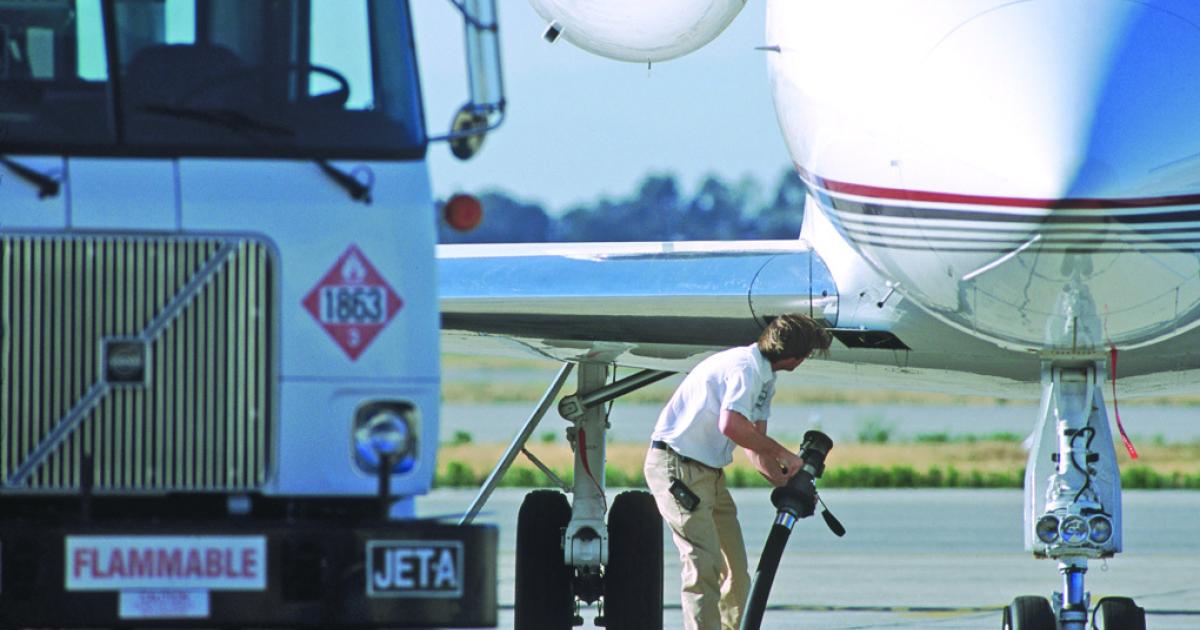
Dumani Ndebele, regional FBO director at ExecuJet Middle East, said many business aviation operators were preparing for charter flights in early March. “Activity was very high during the first two weeks,” he said. “The situation has now stabilized. We are seeing a decline in passenger traffic given the uncertainty of the situation, but many of our Middle Eastern clients are still in the region, and our hangar is full.”
Mohammed Husary, executive president of UAS International Trip Support, said business aviation remains critically important to governments, nongovernmental organizations and commercial enterprises in the Middle East. “We are seeing operators, service providers and contractors demonstrate remarkable flexibility and foresight by adjusting flight plans, strengthening risk management and using real-time information to ensure the well-being of both crew and passengers,” he said.
Fuel Costs Double
According to IATA data, the average weekly fuel price for the week ending March 27 was $195.19 per barrel, 1% lower than the previous week but 104% higher than the previous month. According to the Platts Global Index New York, the price was $198.90 per barrel on April 1.
WingX Advance reported on April 2 that aviation fuel prices in the US had more than doubled since the beginning of March, reaching $1,710 per metric ton by the end of the month, compared with $742 a year earlier, an increase of 130%.
Vito Gomes, CEO of Aviation Services Management in Dubai, said the outlook for fuel prices in the region is difficult to predict. “Everything depends on the crisis around the Strait of Hormuz, where there are problems transporting products,” he said.
If the situation escalates further, supplies will have to be arranged from outside the Gulf, particularly to serve Asian and Middle Eastern markets. “Quite a lot has happened since February 28,” Ndebele said. “Initially, there was the airspace closure [in the first week of the crisis], when virtually all of our activity stopped. It was more a matter of readjusting—establishing communication with the airport administration and the General Civil Aviation Authority to determine what was happening.”
He expects a degree of stability as long as there is sufficient market certainty to operate charter flights and transport passengers. “Most of our clients are based here in the region and have their own aircraft,” he said. “We expect that side of our business to continue as usual.”
Protracted Conflict
Vista chief operating officer Nick van der Meer said operations remain severely constrained by airspace restrictions, security concerns and operational uncertainty.
“A prolonged conflict is likely to affect demand and operations, although the industry remains adaptable,” he said. “Overall, the situation remains dynamic, and we are closely monitoring developments while prioritizing safety and operational integrity.”
Before the war began, Universal Weather and Aviation planned to open fixed-base operations (FBOs) in Riyadh, Jeddah and Dammam within several months. The company said this strategy remains in place.
“We understand that a protracted conflict could affect traffic levels in the short term and that passenger traffic at the time of opening could be lower than originally forecast,” said John Hewitt, regional vice president for EMEA. “Nevertheless, this does not change our commitment to bringing these locations into operation and commencing work in Saudi Arabia.”
Mohammed Al-Bukhari, CEO of Jeddah-based Aviation Horizons, lamented the many problems in Egypt, Lebanon and Syria, from the pandemic and the 12-day war with Iran to the new war. “Every time we say, ‘Okay, the situation is stabilizing,’ something new happens,” he said. The Middle East is moving in an unpredictable direction, and planning will remain difficult until the situation stabilizes. “This war will change many things politically in the future,” he said. “The Middle East will not recover for at least another three months [after the end of the war], until people understand what really awaits them.”
On February 28, as Dubai residents headed outdoors for the weekend, they heard ominous explosions reverberating across the sky, distant yet almost tangible, and few immediately realized that the Gulf had suddenly found itself at war once again.
A month later, there was no clear end to the war in sight. In early April, US President Trump suggested that the war could end in “two or three weeks,” but the unpredictability of Middle Eastern geopolitics could mean that the decision is not entirely up to him. Concerned about securing food and oil supplies, the UAE threatened to join the war to reopen the Strait of Hormuz.
Iran’s response to the US-Israeli bombing resulted in serious incidents, including a drone attack on Dubai International Airport (OMDB) on March 7 that briefly halted airport operations. Demand for private evacuation and rescue charter flights surged after missile strikes repeatedly disrupted state-organized repatriation flights.

Sponsored by Jet24 global
The March 18 attack on Qatar’s liquefied natural gas processing facility in Ras Laffan caused significant damage, leaving about 17% of its capacity out of operation, with repairs likely to take between three and five years.
Iran’s late-March missile strikes on airports in Kuwait and Iraq, as well as a strike on a US air base in Saudi Arabia, underscored the danger to aircraft, even on the ground. Nevertheless, commercial aviation returned to near-full operation: Cirium data published on March 27 showed that only 13% of scheduled regional flights had been canceled or were not operating at that time.
Since the war began, UAE air defense systems have intercepted more than 430 ballistic missiles, 20 cruise missiles and 2,000 unmanned aerial vehicles. The WAM news agency reported the deaths of two Emirati soldiers and a Moroccan working under contract with the armed forces, as well as nine civilians. About 190 foreign nationals sustained injuries of varying severity.
Evolving Guidance
Hani Bakr, MedAire’s senior vice president for aviation and maritime security in Cairo, said business aviation operators face rapidly changing NOTAMs (air traffic notices), evolving conflict-zone guidance, and sudden airspace closures and restrictions, significantly complicating flight planning.
“The main factors determining risk in the region are airspace instability and unpredictability, rather than any single fixed threat,” he said. Recently, flights have been operating on longer routes, fuel consumption has increased, crew-duty constraints have grown, and insurance issues have arisen. Collective crew resistance to operating certain flights that exceed acceptable risk thresholds is causing delays and schedule disruptions.
Erik Schouten, CEO of Dyami Security Intelligence, said Qatar, the UAE and Bahrain remain the areas of greatest concern for business aviation operations. The threats are associated with Iranian attempts to strike tourist areas or business centers where banks or US companies are located, as well as military facilities or air bases, ports and embassies.
“Iran still has an enormous number of ballistic missiles and drones,” he said. “They only need to launch once or twice a day to disrupt the enemy’s plans.”
Traffic Falls Sharply
WingX Advance estimated that business jet departures from Middle Eastern countries fell by 41% in late March and by 14% since the beginning of the year. Argus International’s data on business jet market activity showed that monthly flights in the Middle East fell by 58% in March compared with February 2026, while the annual figure for March 2026 was down 55% compared with March 2025.
“The UAE normally ranks first for activity, but this year its figures fell by 81% month on month and 75% year on year,” said Travis Kuhn, senior vice president of software. “The only countries seeing activity increase compared with last year are Egypt, Oman and Syria.”
US fractional aircraft ownership provider Flexjet, which received a license in December to operate domestic flights in Saudi Arabia, suspended operations until further notice across most Middle Eastern destinations, except Cyprus, Turkey, Armenia and Azerbaijan.
“Until Flexjet determines that the airspace or conditions on the ground meet a safety threshold consistent with our rigorous standards, we will continue to impose voluntary operational restrictions,” a Flexjet representative said.
Situation Stabilizes
Dumani Ndebele, regional FBO director at ExecuJet Middle East, said many business aviation operators were preparing for charter flights in early March. “Activity was very high during the first two weeks,” he said. “The situation has now stabilized. We are seeing a decline in passenger traffic given the uncertainty of the situation, but many of our Middle Eastern clients are still in the region, and our hangar is full.”
Mohammed Husary, executive president of UAS International Trip Support, said business aviation remains critically important to governments, nongovernmental organizations and commercial enterprises in the Middle East. “We are seeing operators, service providers and contractors demonstrate remarkable flexibility and foresight by adjusting flight plans, strengthening risk management and using real-time information to ensure the well-being of both crew and passengers,” he said.
Fuel Costs Double
According to IATA data, the average weekly fuel price for the week ending March 27 was $195.19 per barrel, 1% lower than the previous week but 104% higher than the previous month. According to the Platts Global Index New York, the price was $198.90 per barrel on April 1.
WingX Advance reported on April 2 that aviation fuel prices in the US had more than doubled since the beginning of March, reaching $1,710 per metric ton by the end of the month, compared with $742 a year earlier, an increase of 130%.
Vito Gomes, CEO of Aviation Services Management in Dubai, said the outlook for fuel prices in the region is difficult to predict. “Everything depends on the crisis around the Strait of Hormuz, where there are problems transporting products,” he said.
If the situation escalates further, supplies will have to be arranged from outside the Gulf, particularly to serve Asian and Middle Eastern markets. “Quite a lot has happened since February 28,” Ndebele said. “Initially, there was the airspace closure [in the first week of the crisis], when virtually all of our activity stopped. It was more a matter of readjusting—establishing communication with the airport administration and the General Civil Aviation Authority to determine what was happening.”
He expects a degree of stability as long as there is sufficient market certainty to operate charter flights and transport passengers. “Most of our clients are based here in the region and have their own aircraft,” he said. “We expect that side of our business to continue as usual.”
Protracted Conflict
Vista chief operating officer Nick van der Meer said operations remain severely constrained by airspace restrictions, security concerns and operational uncertainty.
“A prolonged conflict is likely to affect demand and operations, although the industry remains adaptable,” he said. “Overall, the situation remains dynamic, and we are closely monitoring developments while prioritizing safety and operational integrity.”
Before the war began, Universal Weather and Aviation planned to open fixed-base operations (FBOs) in Riyadh, Jeddah and Dammam within several months. The company said this strategy remains in place.
“We understand that a protracted conflict could affect traffic levels in the short term and that passenger traffic at the time of opening could be lower than originally forecast,” said John Hewitt, regional vice president for EMEA. “Nevertheless, this does not change our commitment to bringing these locations into operation and commencing work in Saudi Arabia.”
Mohammed Al-Bukhari, CEO of Jeddah-based Aviation Horizons, lamented the many problems in Egypt, Lebanon and Syria, from the pandemic and the 12-day war with Iran to the new war. “Every time we say, ‘Okay, the situation is stabilizing,’ something new happens,” he said. The Middle East is moving in an unpredictable direction, and planning will remain difficult until the situation stabilizes. “This war will change many things politically in the future,” he said. “The Middle East will not recover for at least another three months [after the end of the war], until people understand what really awaits them.”
Popular tags: