- News
- Oct 28, 2026
- 8 min read
New Las Vegas campus supports private flight operations
A new Las Vegas airport campus combines an exclusive-use terminal, hangars, ramp space and on-site maintenance as private flight demand rises.
Daria Konstantine


Nearly 8,000 flights in 2025. That’s up nearly 45% from 2022, according to NetJets’ October 2026 announcement detailing the company’s flight activity in Las Vegas. For owners and operators, that growth makes a dedicated ground operation more than a hospitality investment.
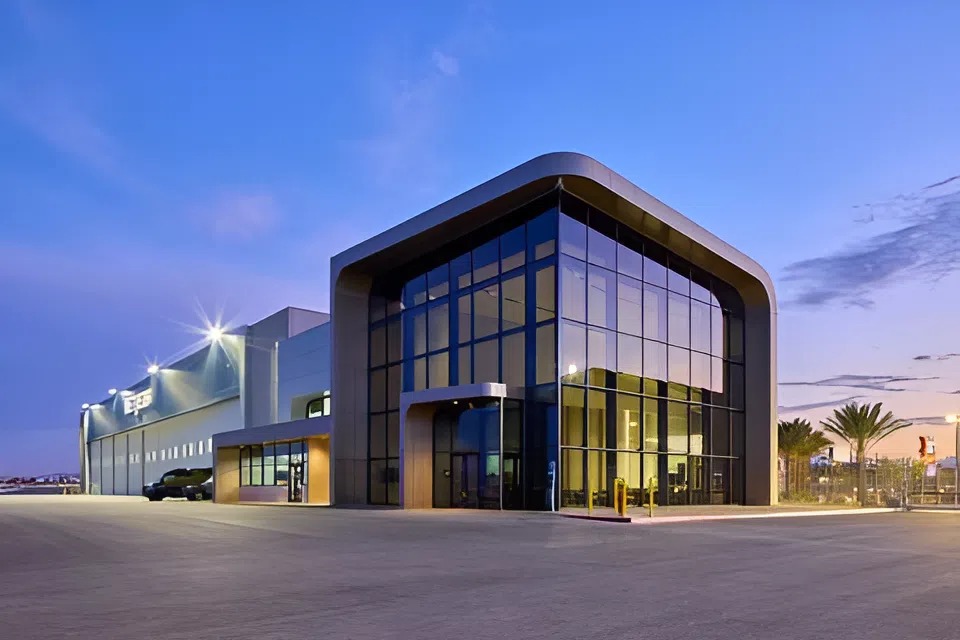
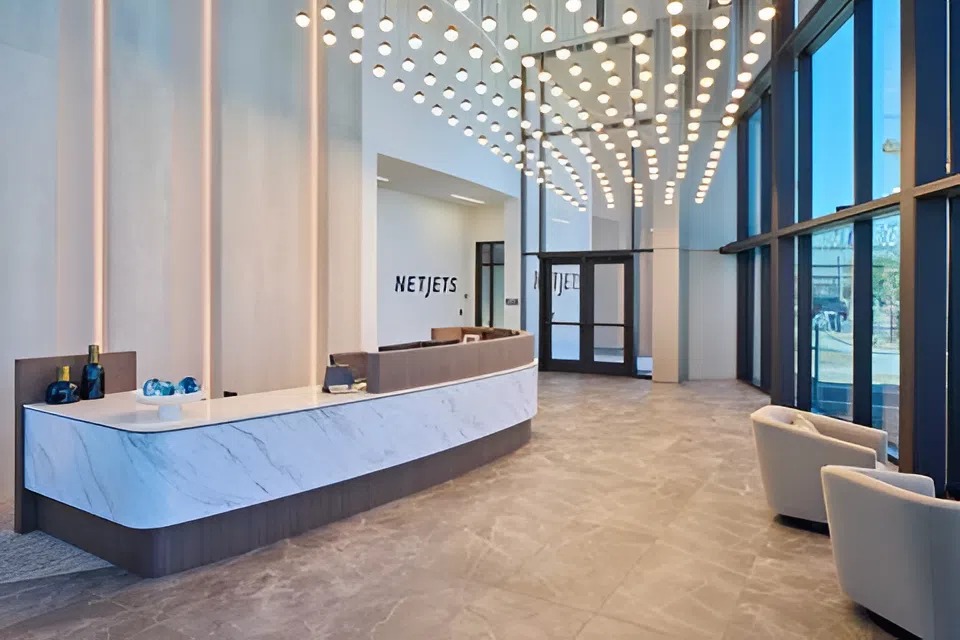
The campus exceeds 300,000 sq ft. NetJets and Signature Aviation have opened it at Harry Reid International Airport, combining an exclusive-use terminal, two hangars, preferred-use ramp space and on-site maintenance. The reception draws the eye first. Behind it, the companies are betting on infrastructure to smooth operations as demand for Las Vegas continues to grow.
Demand Gives the Investment Its Logic
Nearly 30 per cent. That’s the year-on-year increase NetJets reports in Las Vegas demand for 2026 through its October announcement, against the equivalent period in 2025.
The growth predates this year’s surge. The company’s October 2026 release puts flight-activity growth since 2022 at nearly 45 per cent, reaching almost 8,000 flights through the end of 2025. NetJets reported those figures; independent traffic audits haven’t verified them. That qualification doesn’t obscure the commercial logic: NetJets is putting infrastructure where its customers already travel.
The wider market supplies some context. JETNET’s May 2026 market commentary describes fractional demand pulling ahead of other operating models, as demand concentrates in flexible ownership structures. A dedicated destination campus follows that pattern. The operator gains more control over the experience, while customers avoid managing an aircraft and the infrastructure needed to support it.
Capacity matters. So does control.
A lounge makes waiting more comfortable. Ramp access, hangar support and maintenance capability tackle some of the operational reasons an owner might have to wait at all.
A Terminal Designed Around Separation
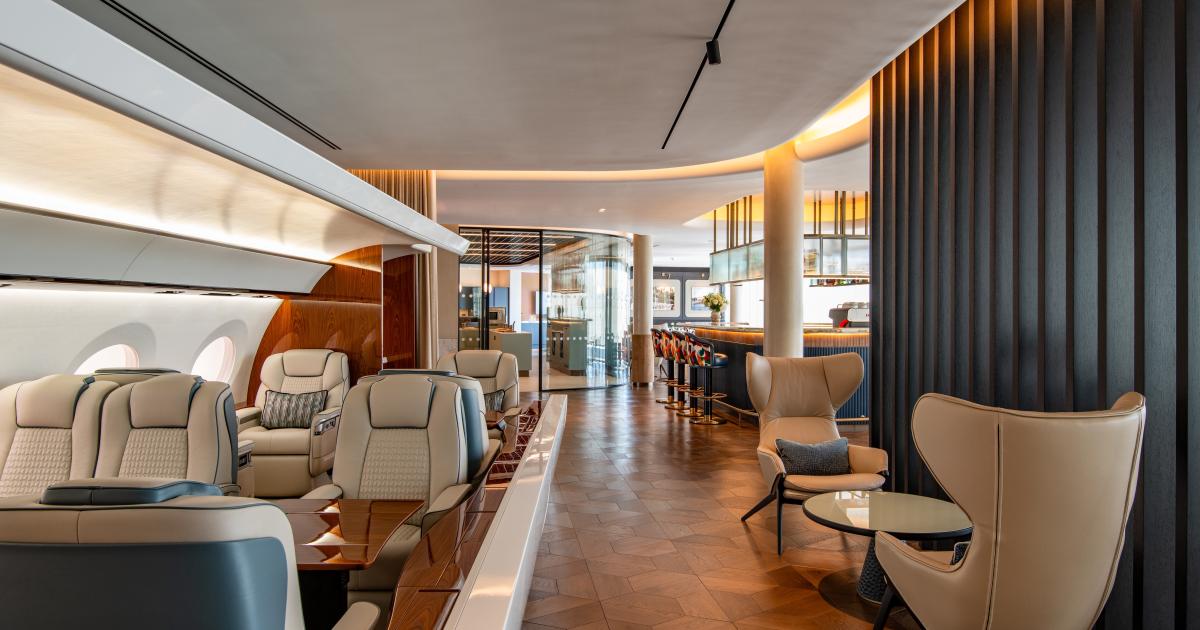
The architectural centrepiece is a 17,069 sq ft exclusive-use terminal with a double-height waiting area. The design opens up the view. Business Jet Traveler’s October 2026 coverage describes glass walls with panoramic views across the ramp and runway, connecting passengers visually with aircraft rather than enclosing them in an anonymous waiting room.
Privacy shapes the layout as well. Aviation Week’s October 2026 coverage identifies a lounge, VIP conference rooms and a dedicated family room. Those separate spaces accommodate a confidential discussion before departure, a quiet break between commitments, or time with children away from the main lounge.
The opening dates need careful reading. NetJets and Signature announce the opening on October 20; Business Jet Traveler’s October 26 account says operations are expected to begin the following Monday. The announcement doesn’t necessarily mark the start of routine service.
The Real Asset Is Behind the Lounge
What changes once the aircraft doors close?
The ramp provides a staging resource. According to the NetJets and Signature October 2026 release, more than 250,000 sq ft of preferred-use ramp can accommodate approximately 25 aircraft. That gives the operator dedicated staging space. Preferred-use access doesn’t guarantee unrestricted airport access or departure slots.
The two hangars split the work. One supports NetJets fleet operations; the Executive Jet Management hangar accommodates NetJets and EJM aircraft under one roof, according to the same announcement. That adds support beyond arrivals and departures.
The Service Hub extends that support. It’s scheduled to operate 24 hours a day, seven days a week, year-round.
The practical case is straightforward enough. On-site support offers an opportunity to address aircraft needs where demand concentrates, rather than relying entirely on facilities and personnel elsewhere. The evidence stops short of measured gains. It doesn’t quantify downtime reductions, dispatch-reliability improvements or maintenance savings; those remain results to assess, not benefits owners should assume.
What Owners Should Take Away
NetJets’ Las Vegas campus puts infrastructure behind service consistency. Hospitality is the visible expression of that investment, but the operational resources offer the more useful test of its value to owners.
Prospective fractional owners should look past the lounge. When does the facility become fully operational, how does preferred ramp access work during peak periods, and what happens when an aircraft requires maintenance before departure?
NetJets now has more resources to answer those questions. The campus will earn its value less through the scale of its reception than through how rarely owners must think about the operation behind it.
Sources
Nearly 8,000 flights in 2025. That’s up nearly 45% from 2022, according to NetJets’ October 2026 announcement detailing the company’s flight activity in Las Vegas. For owners and operators, that growth makes a dedicated ground operation more than a hospitality investment.
The campus exceeds 300,000 sq ft. NetJets and Signature Aviation have opened it at Harry Reid International Airport, combining an exclusive-use terminal, two hangars, preferred-use ramp space and on-site maintenance. The reception draws the eye first. Behind it, the companies are betting on infrastructure to smooth operations as demand for Las Vegas continues to grow.
Demand Gives the Investment Its Logic
Nearly 30 per cent. That’s the year-on-year increase NetJets reports in Las Vegas demand for 2026 through its October announcement, against the equivalent period in 2025.
The growth predates this year’s surge. The company’s October 2026 release puts flight-activity growth since 2022 at nearly 45 per cent, reaching almost 8,000 flights through the end of 2025. NetJets reported those figures; independent traffic audits haven’t verified them. That qualification doesn’t obscure the commercial logic: NetJets is putting infrastructure where its customers already travel.
The wider market supplies some context. JETNET’s May 2026 market commentary describes fractional demand pulling ahead of other operating models, as demand concentrates in flexible ownership structures. A dedicated destination campus follows that pattern. The operator gains more control over the experience, while customers avoid managing an aircraft and the infrastructure needed to support it.
Capacity matters. So does control.
A lounge makes waiting more comfortable. Ramp access, hangar support and maintenance capability tackle some of the operational reasons an owner might have to wait at all.
A Terminal Designed Around Separation
The architectural centrepiece is a 17,069 sq ft exclusive-use terminal with a double-height waiting area. The design opens up the view. Business Jet Traveler’s October 2026 coverage describes glass walls with panoramic views across the ramp and runway, connecting passengers visually with aircraft rather than enclosing them in an anonymous waiting room.
Privacy shapes the layout as well. Aviation Week’s October 2026 coverage identifies a lounge, VIP conference rooms and a dedicated family room. Those separate spaces accommodate a confidential discussion before departure, a quiet break between commitments, or time with children away from the main lounge.
The opening dates need careful reading. NetJets and Signature announce the opening on October 20; Business Jet Traveler’s October 26 account says operations are expected to begin the following Monday. The announcement doesn’t necessarily mark the start of routine service.
Sponsored by Jet24 global
The Real Asset Is Behind the Lounge
What changes once the aircraft doors close?
The ramp provides a staging resource. According to the NetJets and Signature October 2026 release, more than 250,000 sq ft of preferred-use ramp can accommodate approximately 25 aircraft. That gives the operator dedicated staging space. Preferred-use access doesn’t guarantee unrestricted airport access or departure slots.
The two hangars split the work. One supports NetJets fleet operations; the Executive Jet Management hangar accommodates NetJets and EJM aircraft under one roof, according to the same announcement. That adds support beyond arrivals and departures.
The Service Hub extends that support. It’s scheduled to operate 24 hours a day, seven days a week, year-round.
The practical case is straightforward enough. On-site support offers an opportunity to address aircraft needs where demand concentrates, rather than relying entirely on facilities and personnel elsewhere. The evidence stops short of measured gains. It doesn’t quantify downtime reductions, dispatch-reliability improvements or maintenance savings; those remain results to assess, not benefits owners should assume.
What Owners Should Take Away
NetJets’ Las Vegas campus puts infrastructure behind service consistency. Hospitality is the visible expression of that investment, but the operational resources offer the more useful test of its value to owners.
Prospective fractional owners should look past the lounge. When does the facility become fully operational, how does preferred ramp access work during peak periods, and what happens when an aircraft requires maintenance before departure?
NetJets now has more resources to answer those questions. The campus will earn its value less through the scale of its reception than through how rarely owners must think about the operation behind it.
Sources
Frequently asked questions
- What is the new NetJets facility at Las Vegas Harry Reid International Airport?
- It is a 300,000-plus-square-foot campus developed with Signature Aviation, featuring an exclusive-use terminal, two hangars, preferred-use ramp space and on-site maintenance.
- What services and amenities does the NetJets Las Vegas campus offer?
- The terminal includes a lounge, VIP conference rooms and a family room. The campus also provides hangar support, ramp staging for approximately 25 aircraft and a 24/7 Service Hub.
- When did the NetJets Las Vegas facility open?
- NetJets and Signature Aviation announced the facility’s opening on October 20, 2026. Routine operations were expected to begin the following Monday, according to October 26 coverage.